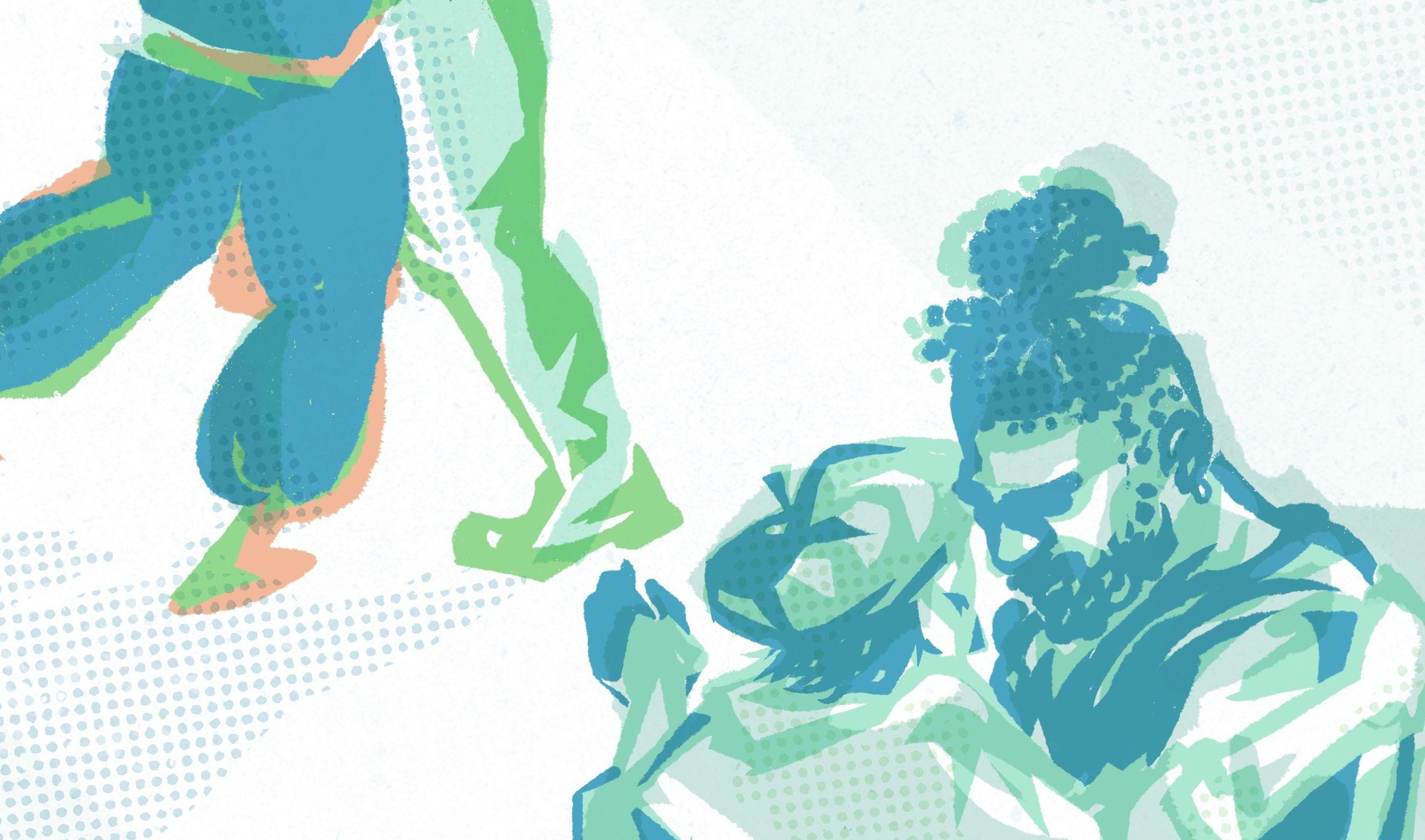
Apr. 29 - International Dance Day
- Info
Action of sharing takes place on International Dance Day.
With the aim of inviting the migrant communities residing in Portugal into institutional spaces, we return with the second edition of the Dancing the World program, which brings to the EVC dances shared in social meetings, from different cultures and traditions. Open to everyone, the initiative meets one of this season’s main objectives, namely, that of integrating communities in moments of sharing and interaction.
MOZAMBICAN DANCE PRACTICES: MARRABENTA
- with Dinís Quilavei and José Jalane
Marrabenta is Mozambique's national musical rhythm and dance. It originated in the 1930s and 1940s, becoming established in the 1950s in the suburban neighborhoods of Lourenço Marques (now Maputo). Characterized by a contagious rhythm, fast tempo, and intense dance, it blends traditional rhythms from the south of the country with Western influences. It evolved as a form of cultural resistance, becoming a vibrant symbol of Mozambican identity.
The name comes from the expression “rebenta” (from the verb “arrebentar,” meaning “to burst”), associated with the intense dance and the way the guitar strings, improvised at the time, would burst. Marrabenta served as a popular expression and cultural resistance during the colonial period, being considered subversive. It began with artists such as Fany Mpfumo and Dilon Djindji, gaining orchestration in the 1970s/1980s with the group Orquestra Marrabenta Star de Moçambique.
The dance is characterized by a fast, lively, and contagious rhythm, with a strong influence from the guitar, intense percussion from drums and maracas, involving sensual and undulating movements, with sideways sliding of the feet. The lyrics were often sung in local languages, addressing everyday life, love, and social intervention. Marrabenta is the rhythm that best defines Mozambique, with a strong presence in national festivities and celebrations, influencing modern genres and remaining alive in contemporary Mozambican culture.
Guest Artists


Imagem
(c) Afonso Martins | EVC 26